Polyphony
Golden West College Gallery, Huntington Beach, CA 2026
Polyphony
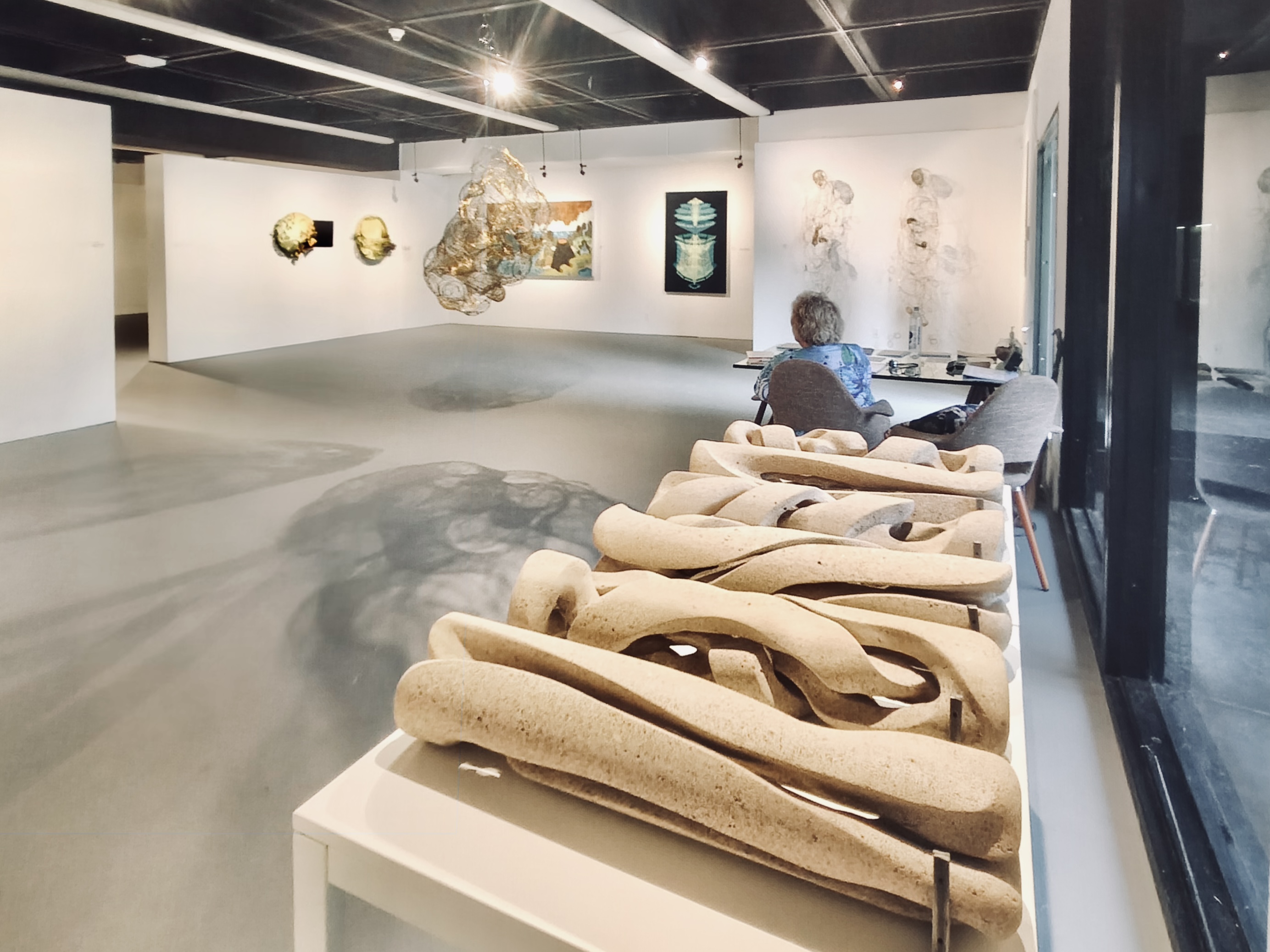
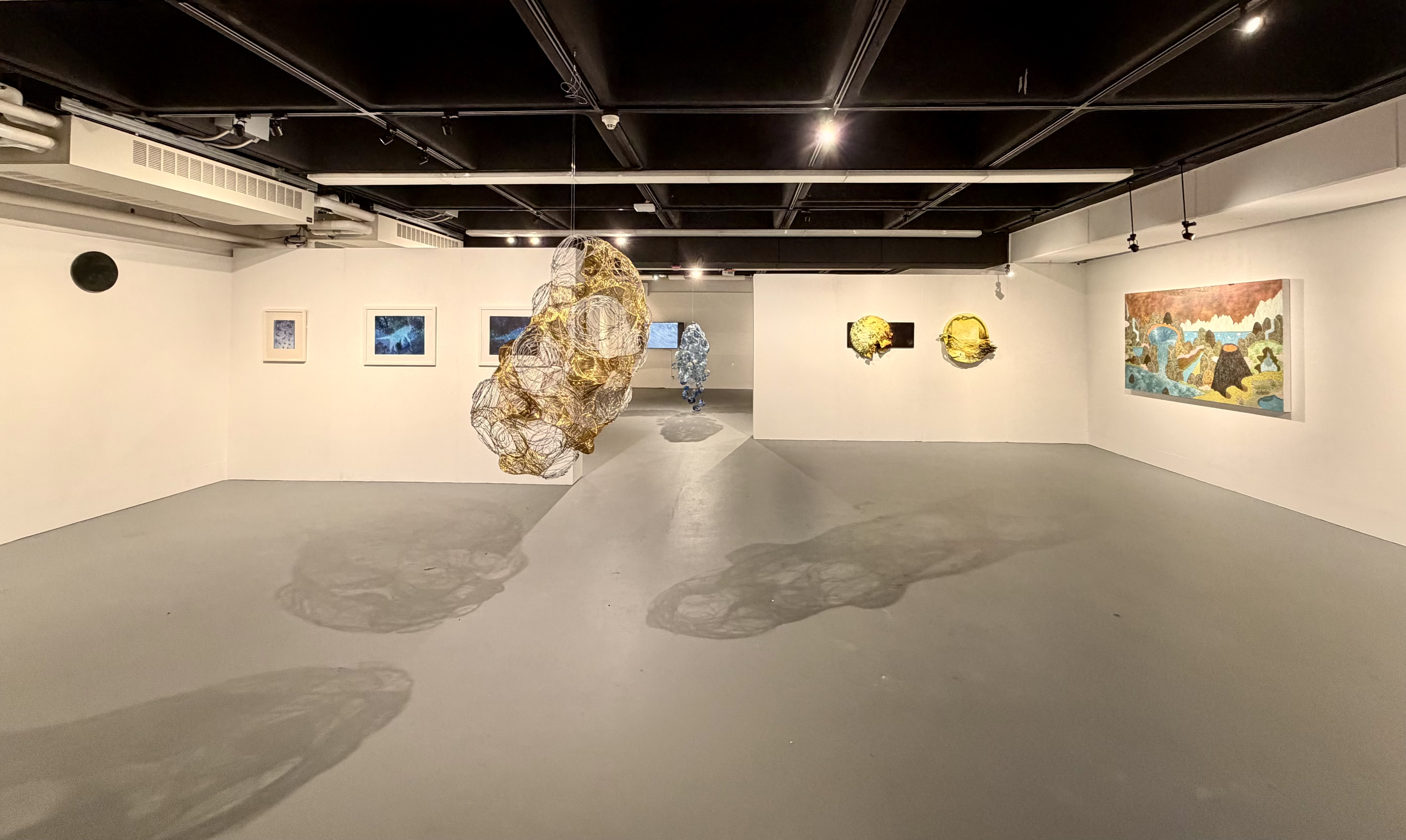
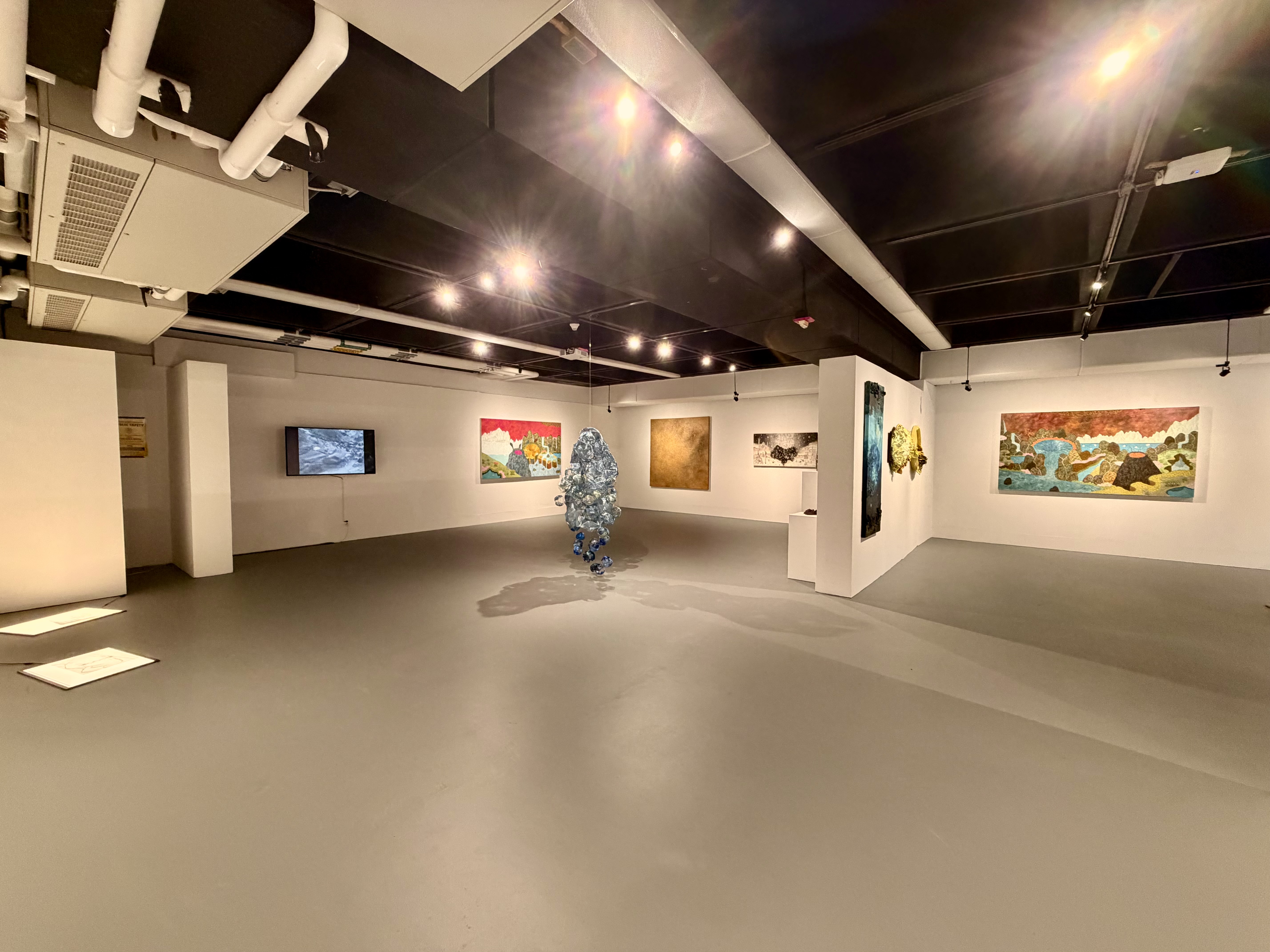
Situated within the multiplicity of diasporic experiences, Polyphony presents artists of Asian descent not through a single narrative, but as a field of distinct voices in dialogue. Bringing together artists whose practices and perspectives diverge, intersect, and resonate, the exhibition foregrounds the particularity of each voice without seeking to reconcile their differences into a uniform whole. Here, personal narratives contrast with broader social and ecological discourses, while familiar approaches coexist with experimental processes and materials.
Rather than resolving these differences into one melodic line, Polyphony allows each voice to retain its distinct register while entering into relation with others. In doing so, the exhibition suggests that solidarity does not require uniformity — it forms a field of voices, distinct yet interconnected, in which difference is not an obstacle to meaning but its very condition.
Curated by Khang Bao Nguyen
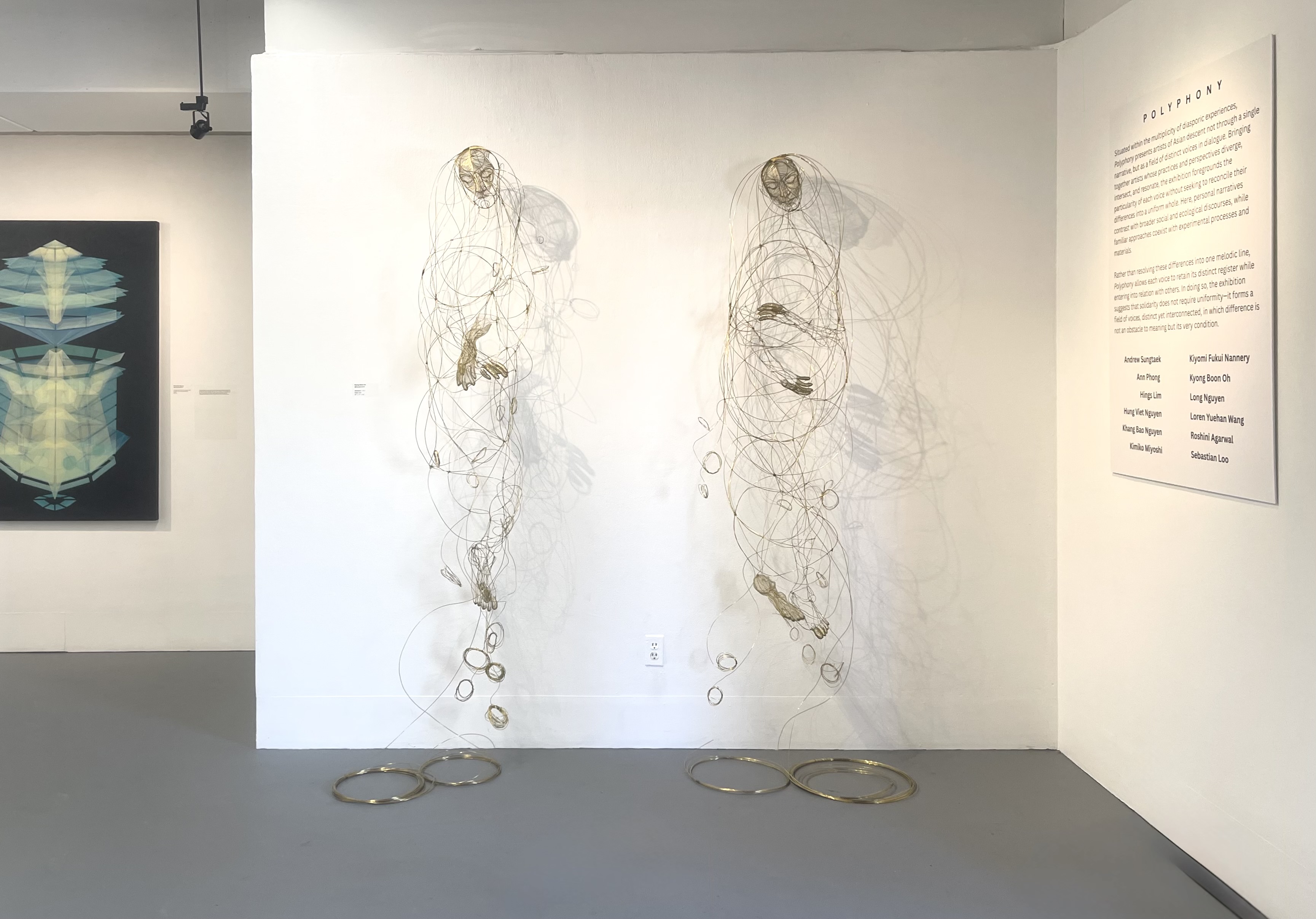
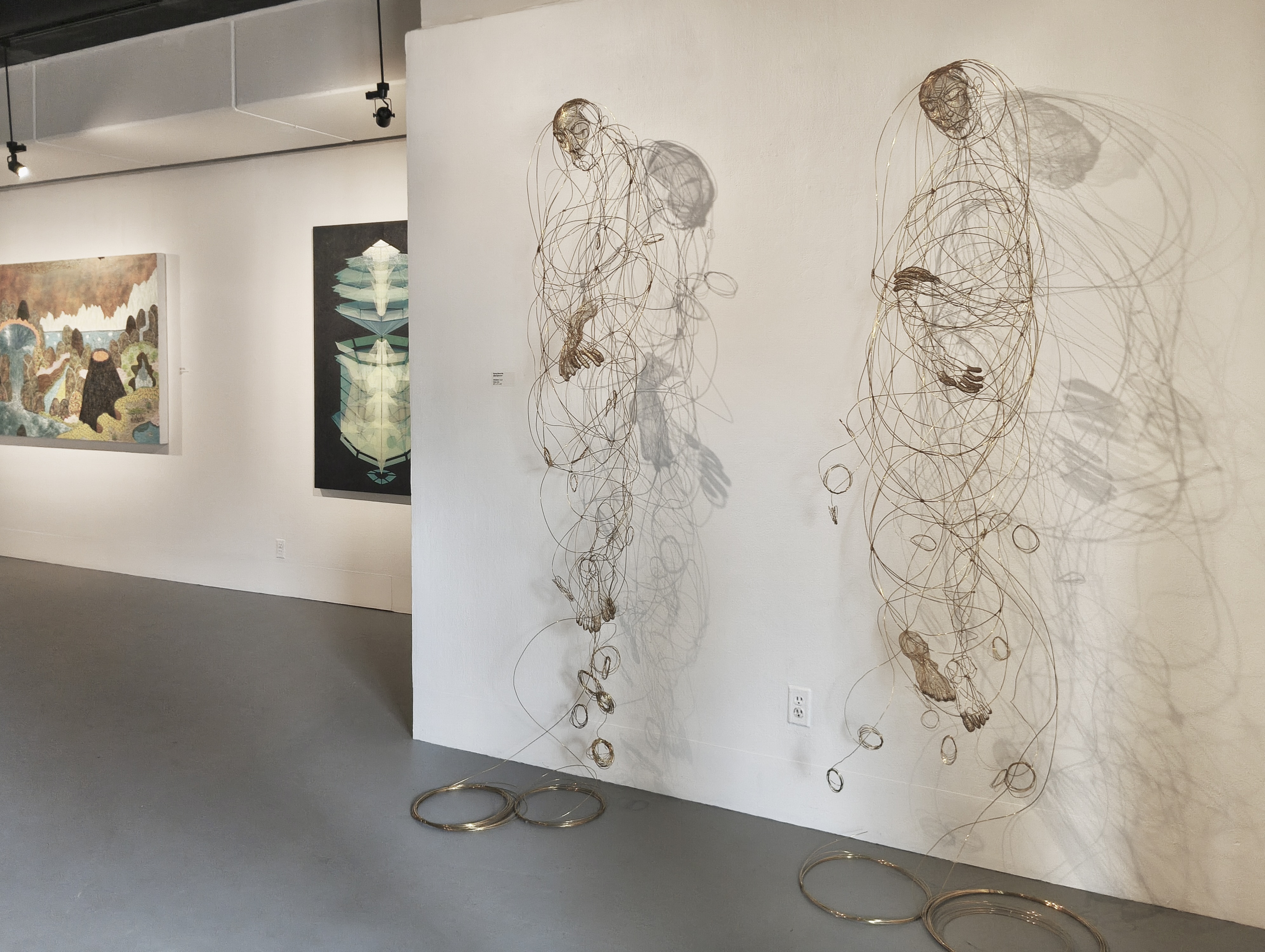
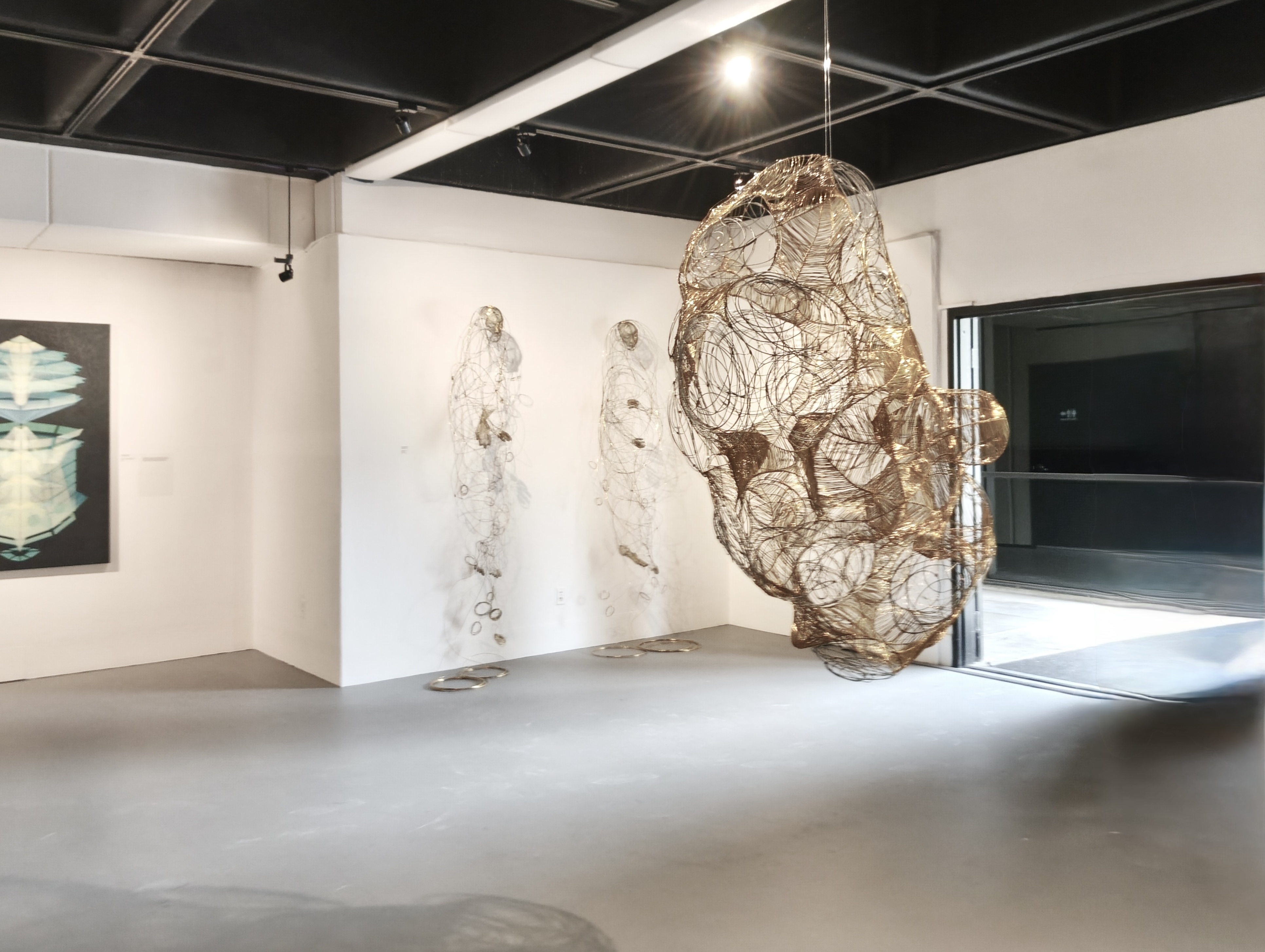
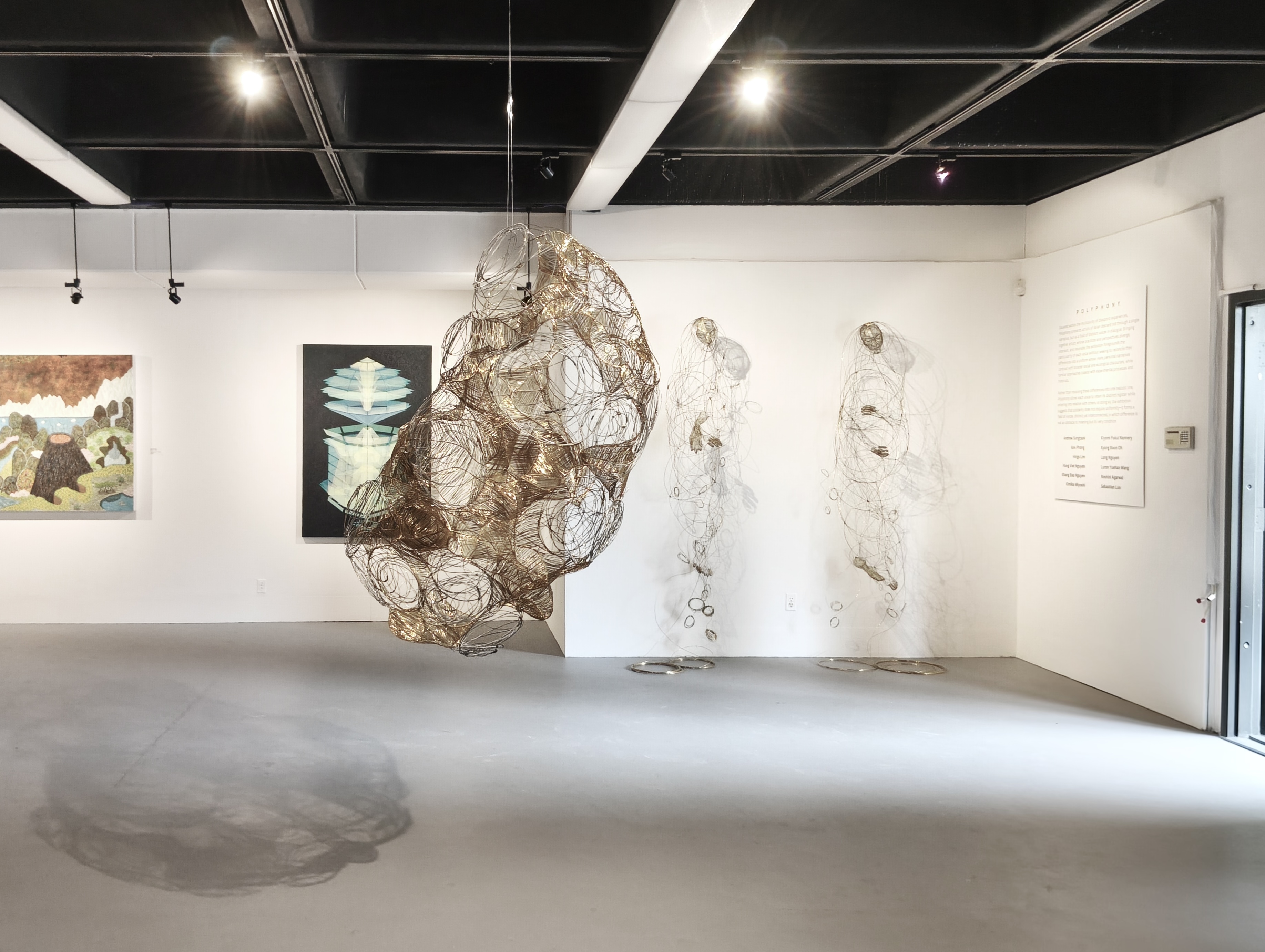
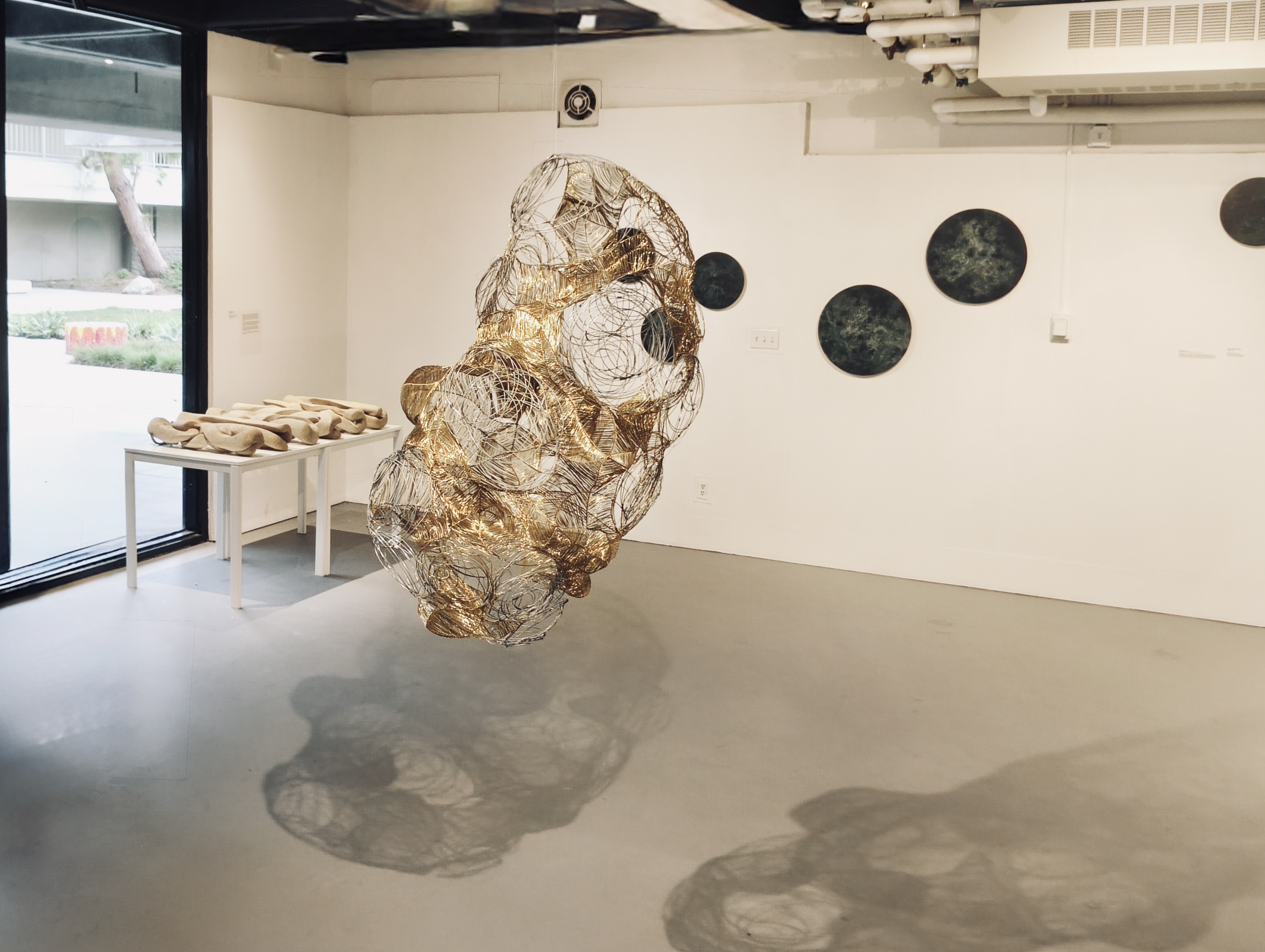
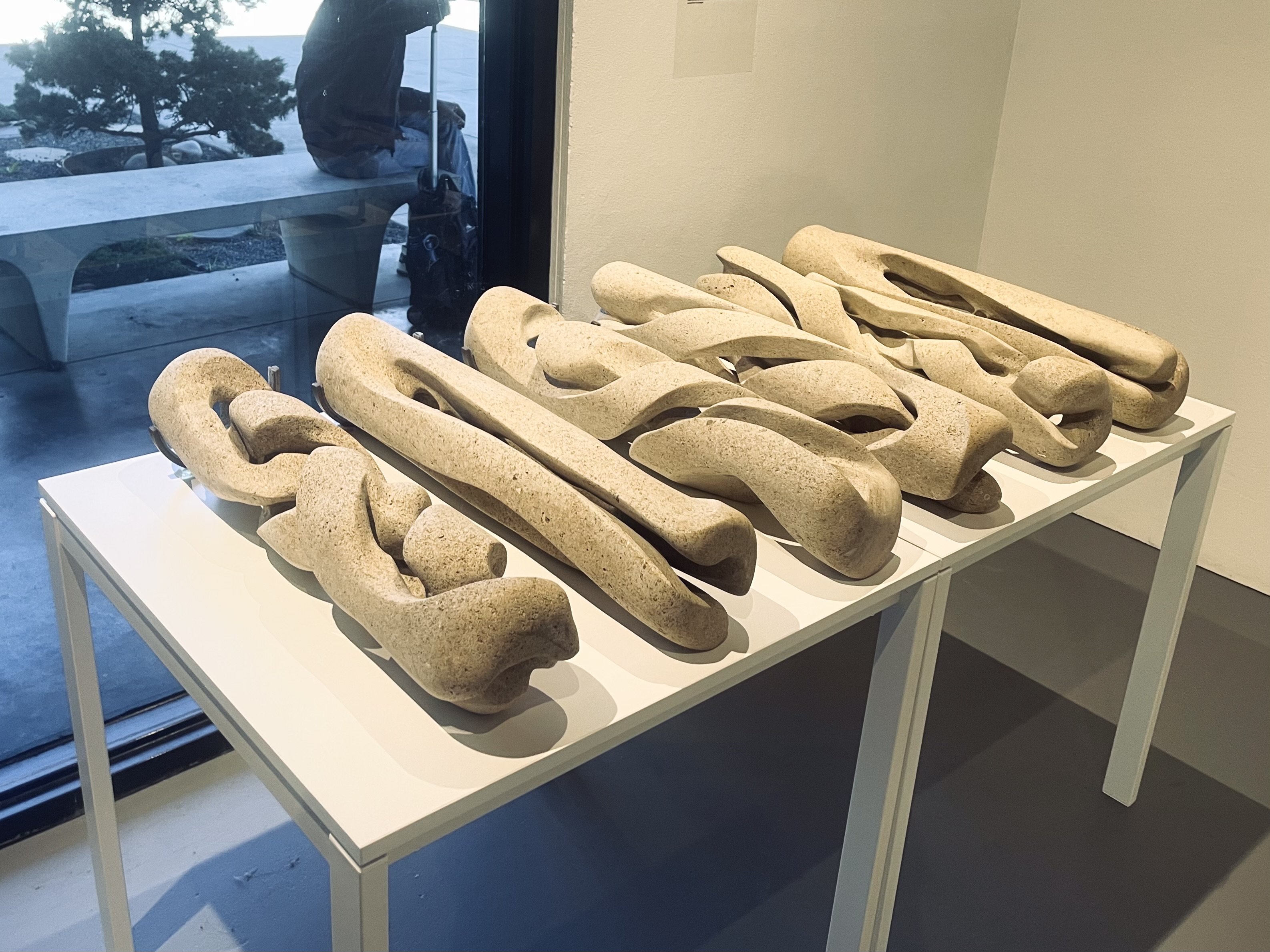
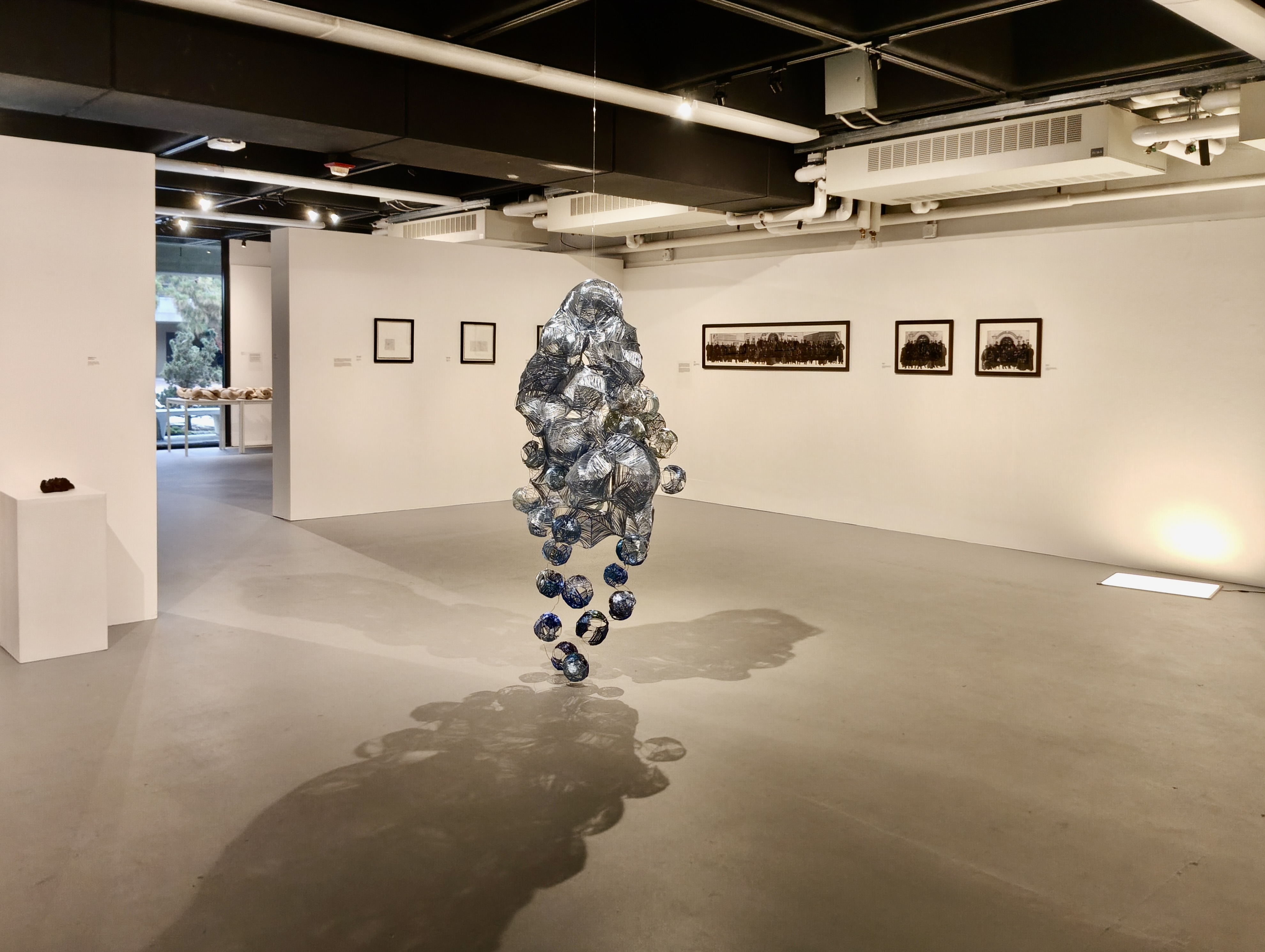
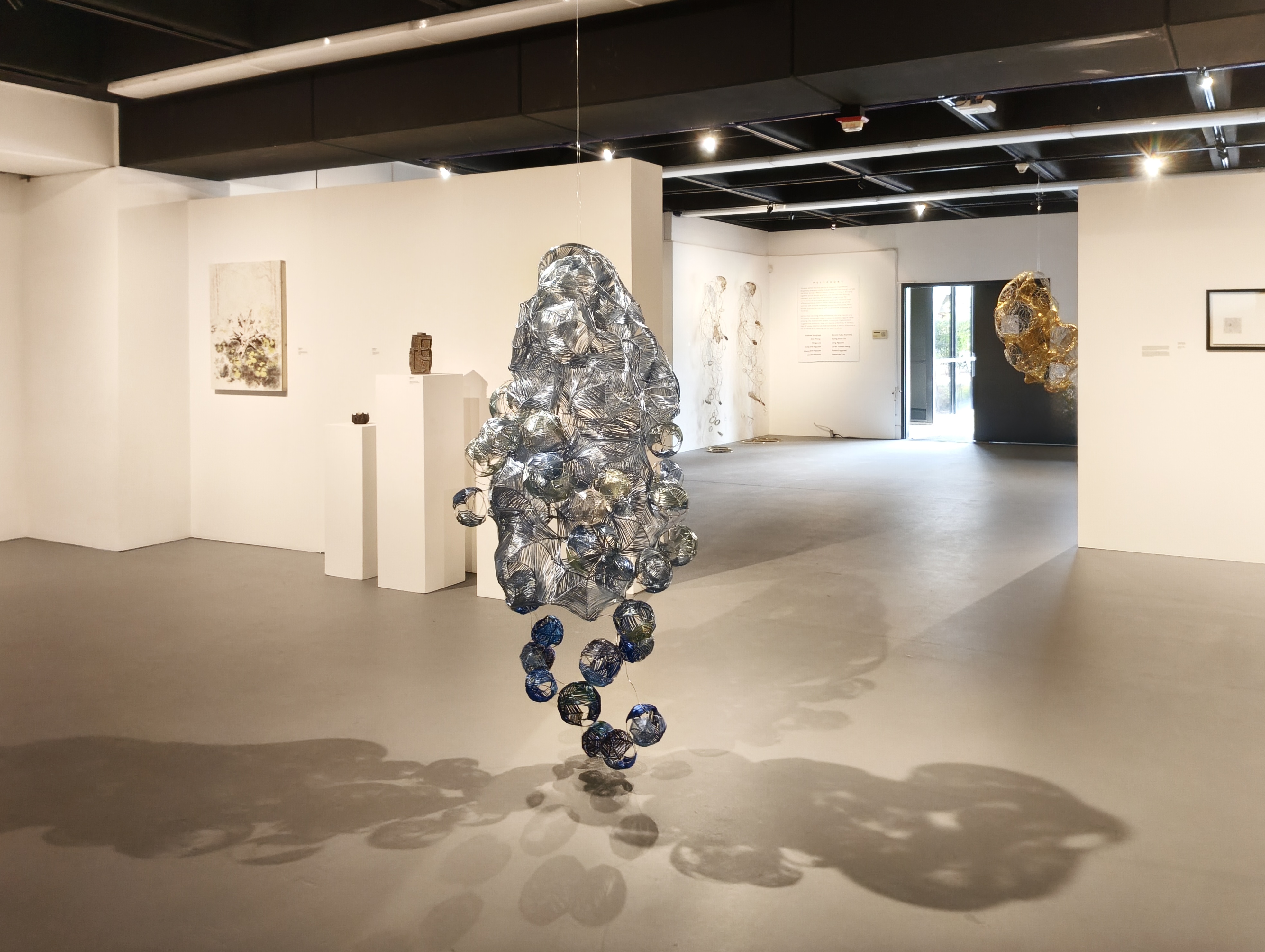
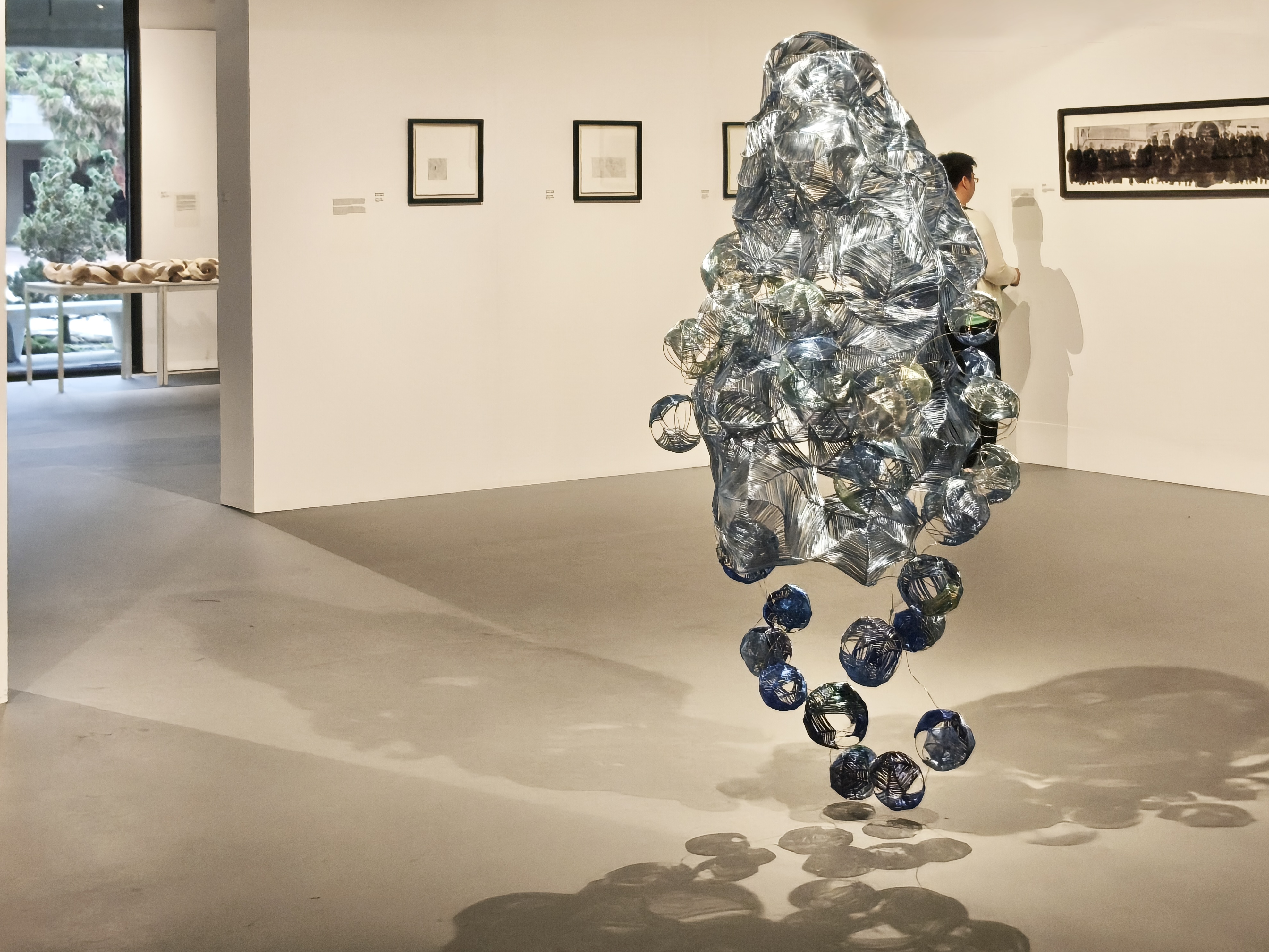
My sculptures emerge through negotiations between weight and suspension, density and permeability, resistance and accommodation. Working with stone and hand-woven metal wire, I investigate how forms are sustained and altered by gravity, support, and the conditions of display. These materials embody contrasting structural logics. Stone holds through mass, carrying the compression and endurance of geological time. Wire is provisional, porous, and dependent on what supports it, maintaining a tenuous relationship to structure. Stone I carve away; wire I build up. Working between these conditions, I examine how sculpture negotiates interior and exterior, mass and void, permanence and transformation.
The Core series is made from discarded geological core samples whose strata remain intact. I carve continuous pathways resembling a Möbius strip through their interiors, opening cavities and passages while preserving the exterior form. Each cut records pressure, resistance, and release; each turn creates a threshold between concealment and exposure, enclosure and passage. Through this process, absence becomes an active component of form. The woven wire sculptures extend this inquiry into support, dependency, and becoming. Constructed through labor-intensive repetition, they function less as fixed forms than as provisional structures for inhabitation: shelters, vessels, thresholds. Their porous surfaces operate simultaneously as skin, membrane, and structure, holding fragility and resilience, containment and exposure together.
Across my practice, sculpture is understood as a condition of continual formation, asking how support becomes visible, how absence acquires material presence, and how fragile structures hold form and weight.