Skip to content
Moon, Womb, and They Remember
Angels Gate Cultural Center, San Pedro, CA 2026
Moon, Womb, and They Remember
At Angels Gate, the horizon does not hold steady. Sky bleeds into water. Water dissolves into air. Edges soften until scale becomes unstable. the moon, the womb, and they remember gathers from this condition. It is an exhibition attuned to a landscape where boundaries dissolve, and where memory is carried not only by people, but by matter itself. The sky, the ocean, the land, and the infrastructures between them hold and transmit what has passed through.
Memory is approached not as a fixed archive, but as a distributed condition. It circulates through bodies, materials, landscapes, and time. Lunar cycles, ecological rhythms, and bodily recurrence structure the exhibition. The moon regulates tides, illumination, and return. The womb is not a biological anatomy, but a spatial logic: a generative, nurturing field that holds matter in continuous transformation.
The exhibition follows a spatial movement from 顯像 – when something begins to surface into form-toward diffusion and return, where past, present, and future co-inhabit a single body and continue to circulate. Memory appears, recedes, and reconfigures. This gesture anchors the exhibition as a ritual of embodied recall, while echoing the site’s own sedimented histories of war, displacement, and incarceration.
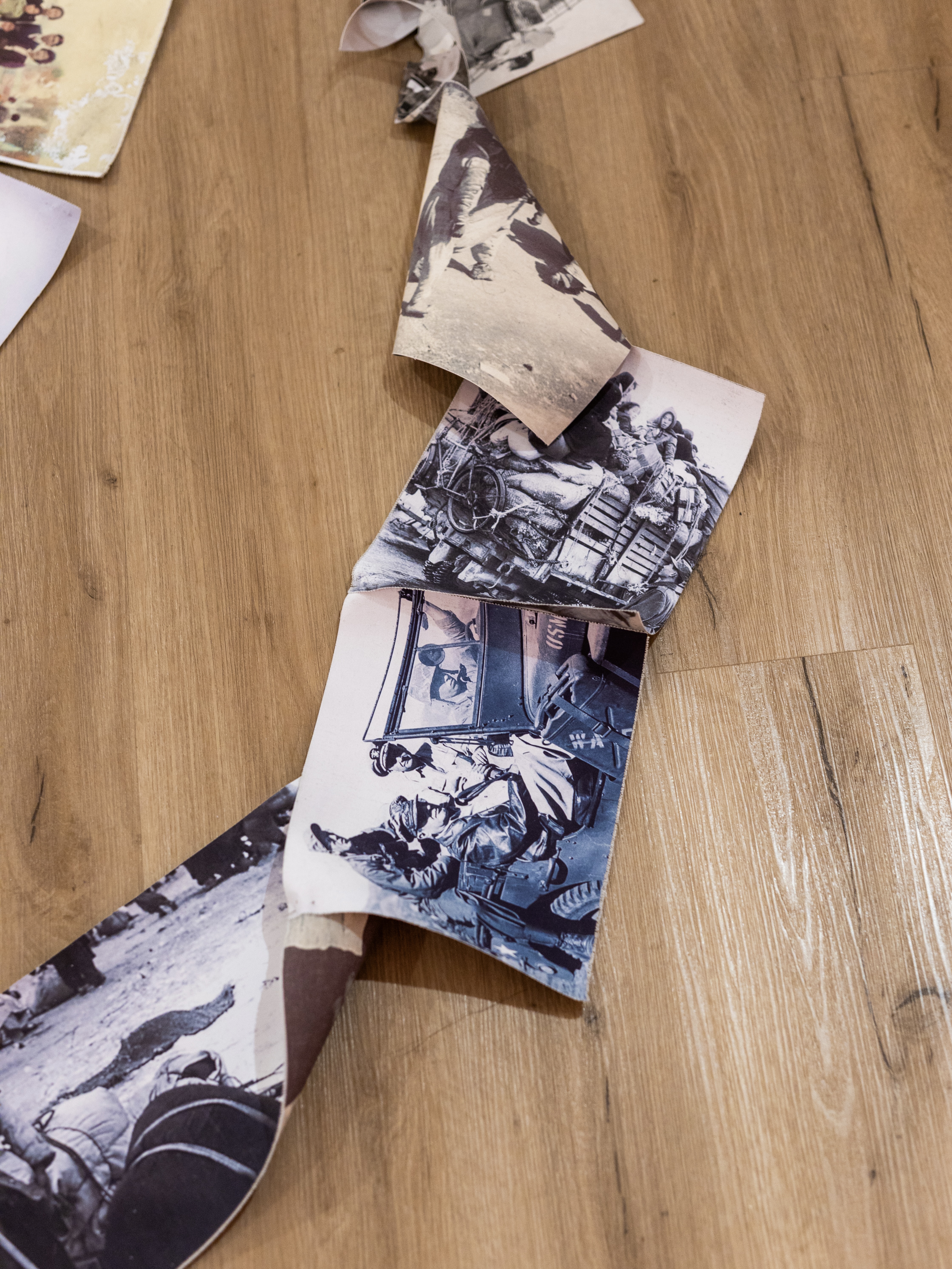
At Angels Gate, this cosmology meets a charged ground. The site, once a military barracks overlooking the Port of Los Angeles, carries histories of surveillance and forced removal, including the displacement of Japanese immigrant fishing communities following Pearl Harbor. Yet this same land functioned as a harbor. A place of arrival, sustenance, and labor. Today, it remains embedded within a major logistical network. Cranes, tanks, and containers move continuously, routing materials and bodies across global systems of exchange. The exhibition responds to this contradiction.
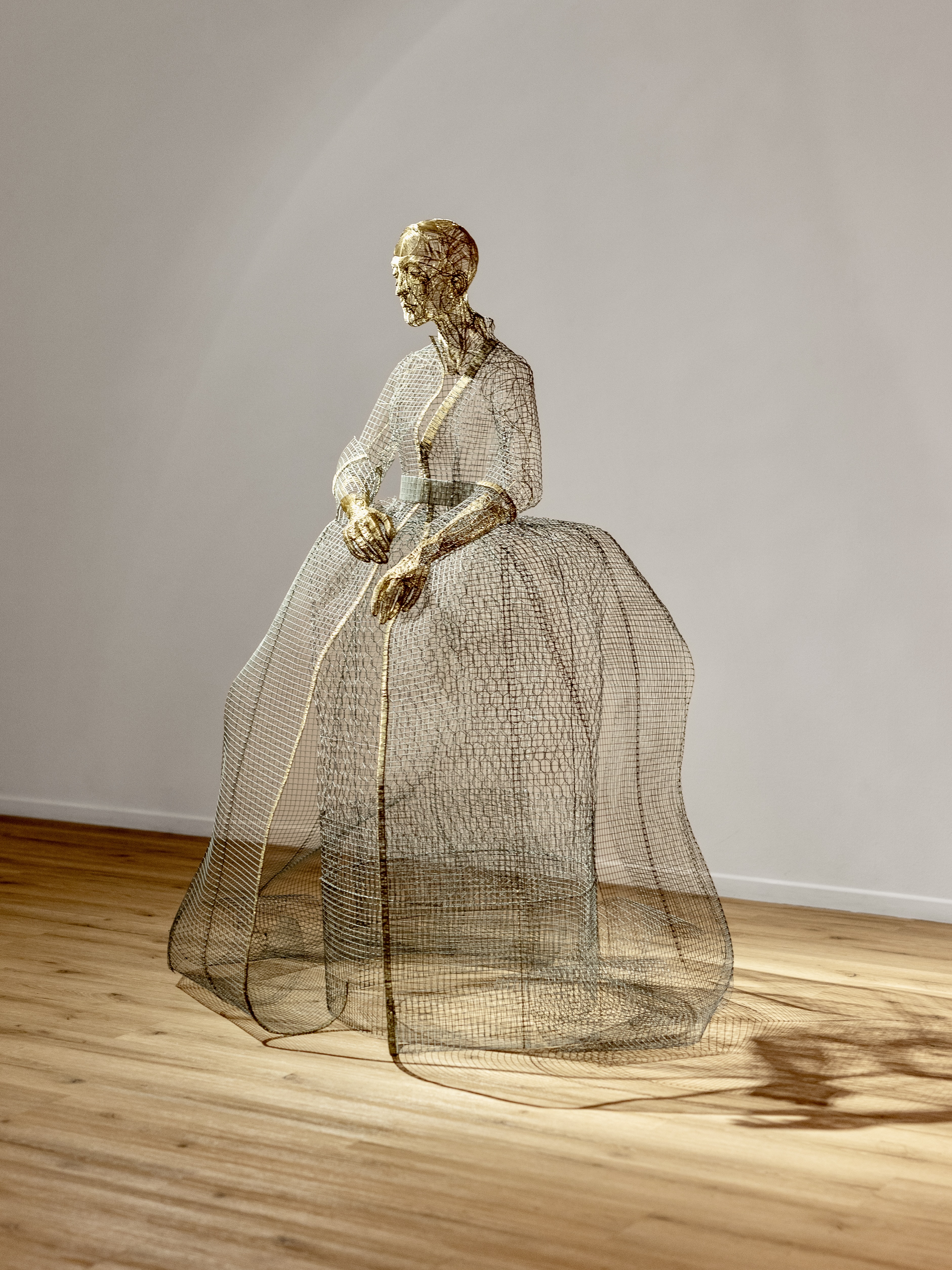
Within Feng Shui and Wuxing philosophy, Metal generates Water. What is rigid gives rise to flow. Steel hulls, pipelines, and storage tanks become unlikely agents of liquidity. What appears engineered produces softness. The port emerges not only as a site of extraction and control, but as a field of transformation.
Here, the womb holds contradiction. Violence and care, memory and forgetting, rupture and repair remain suspended within the same field. This logic extends across the works. Each operates as a node within a larger relational system. Drawing from the Avatamsaka Sutra and the idea of Indra’s Net, the exhibition proposes a world in which all phenomena are interconnected, each reflecting the other without hierarchy. No object stands alone. No memory is singular.
A parallel intuition appears in contemporary physics. Through quantum entanglement, particles remain correlated across distance after interaction. Contact leaves a trace that does not fully disappear. In this sense, memory behaves less like stored information and more like a relational field. Encounters persist.
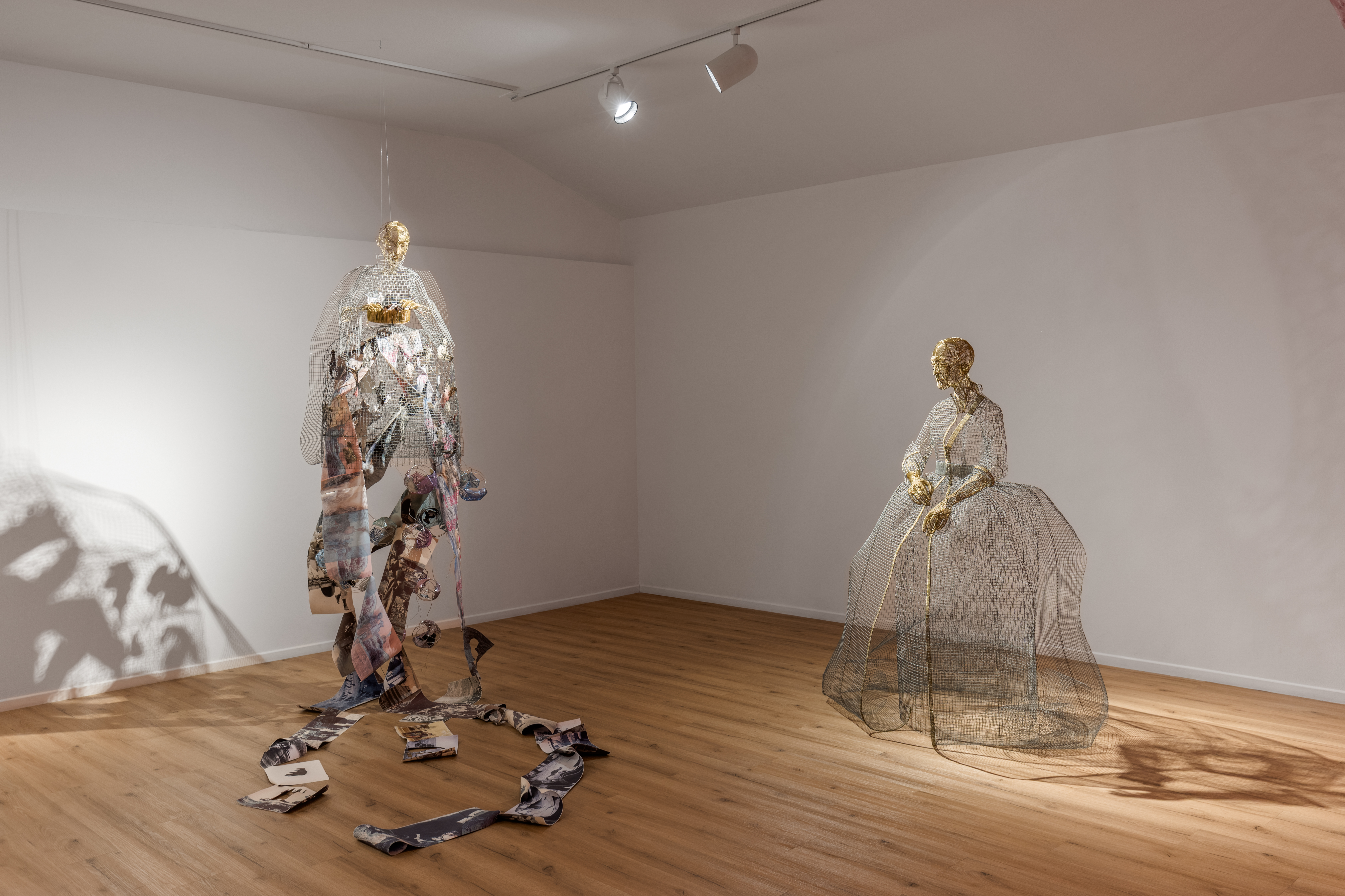
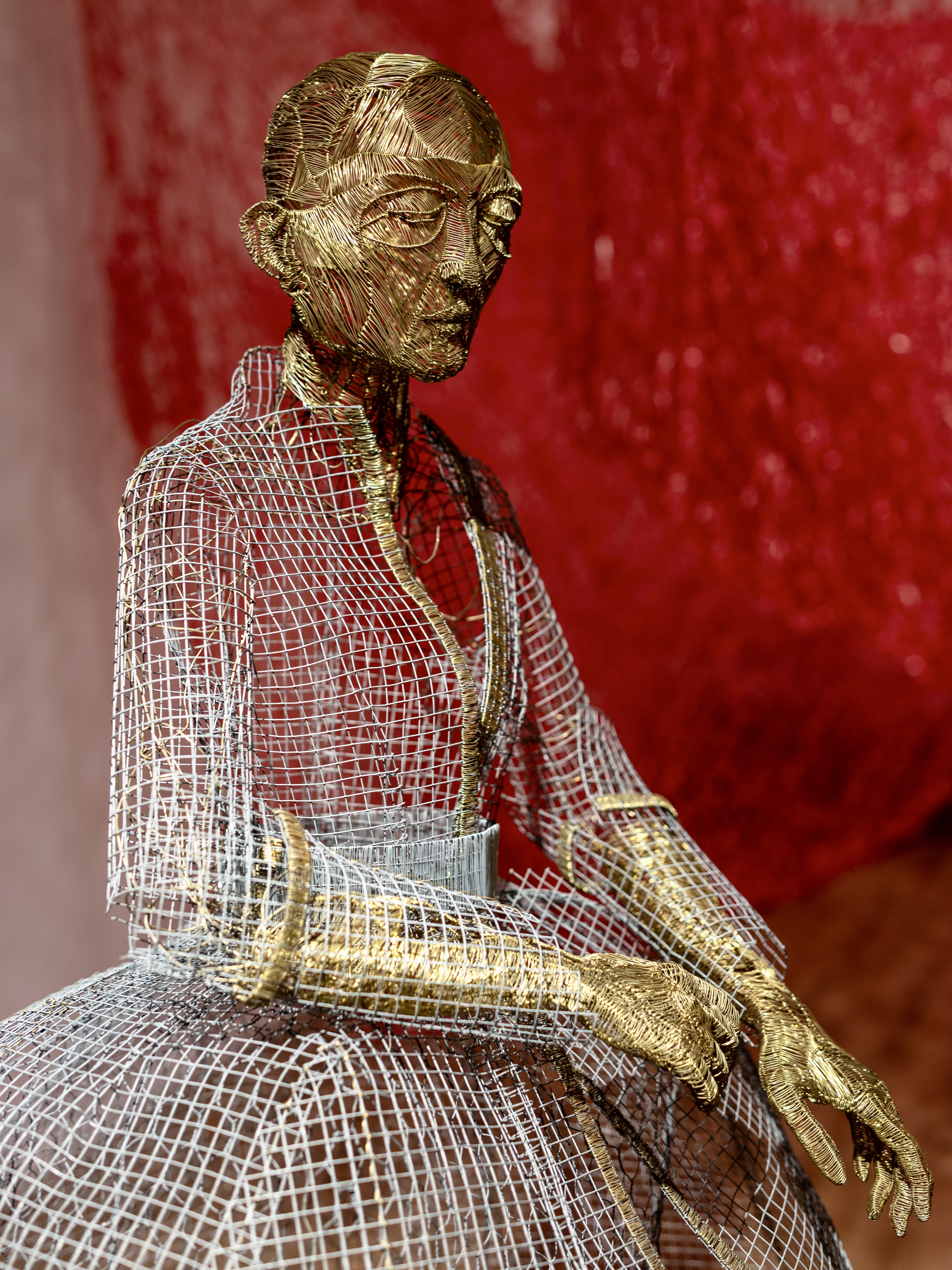
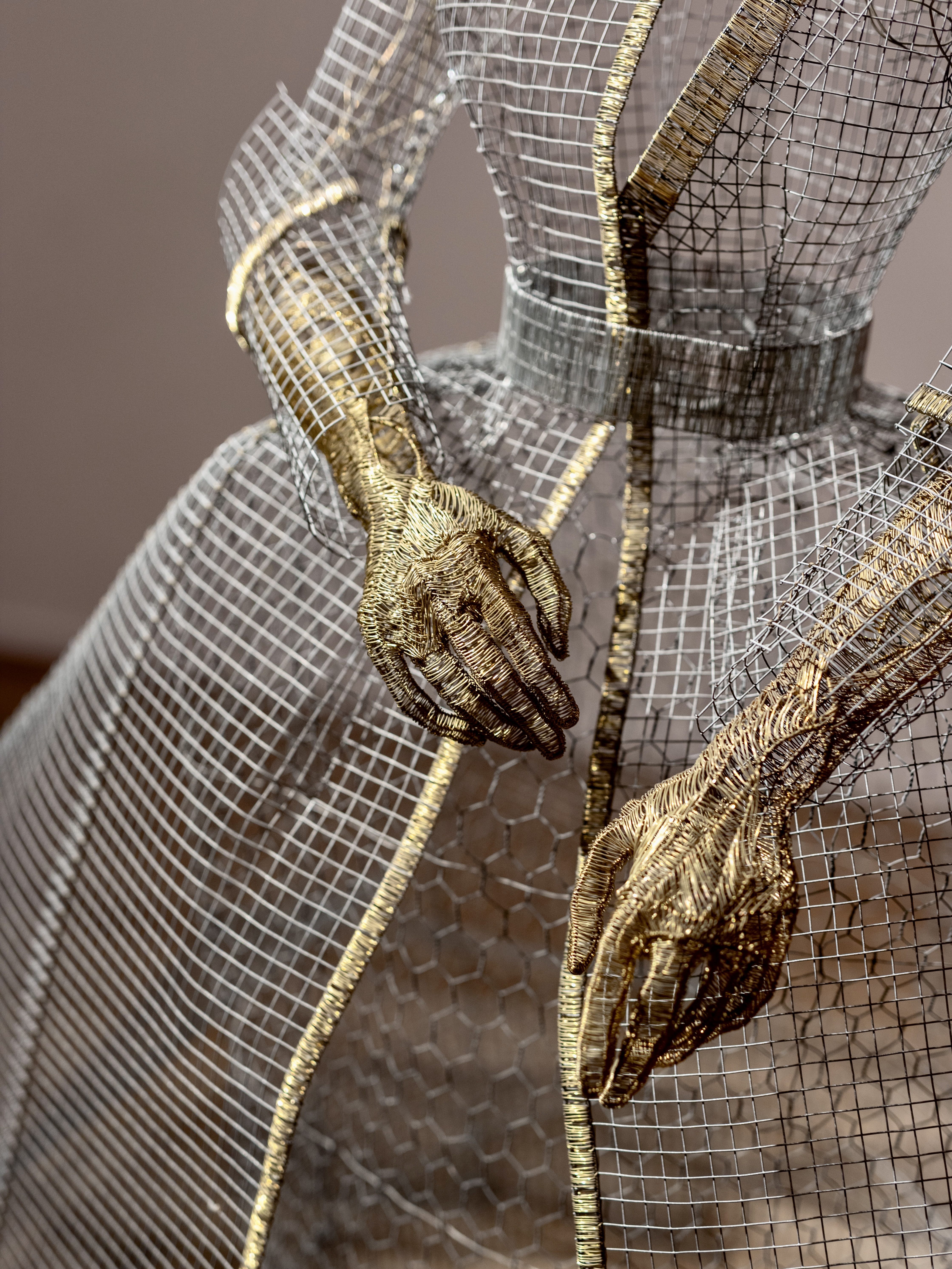
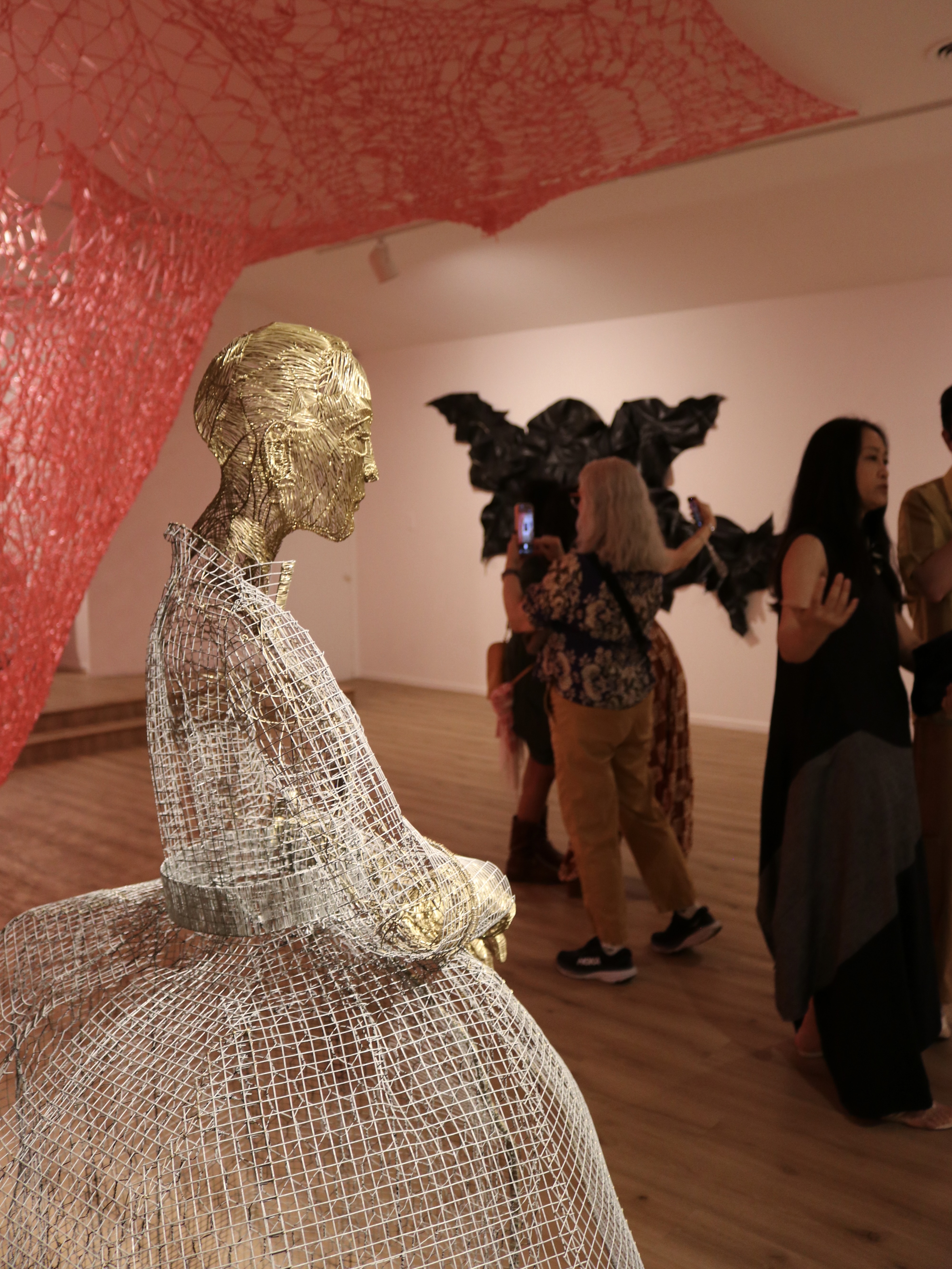
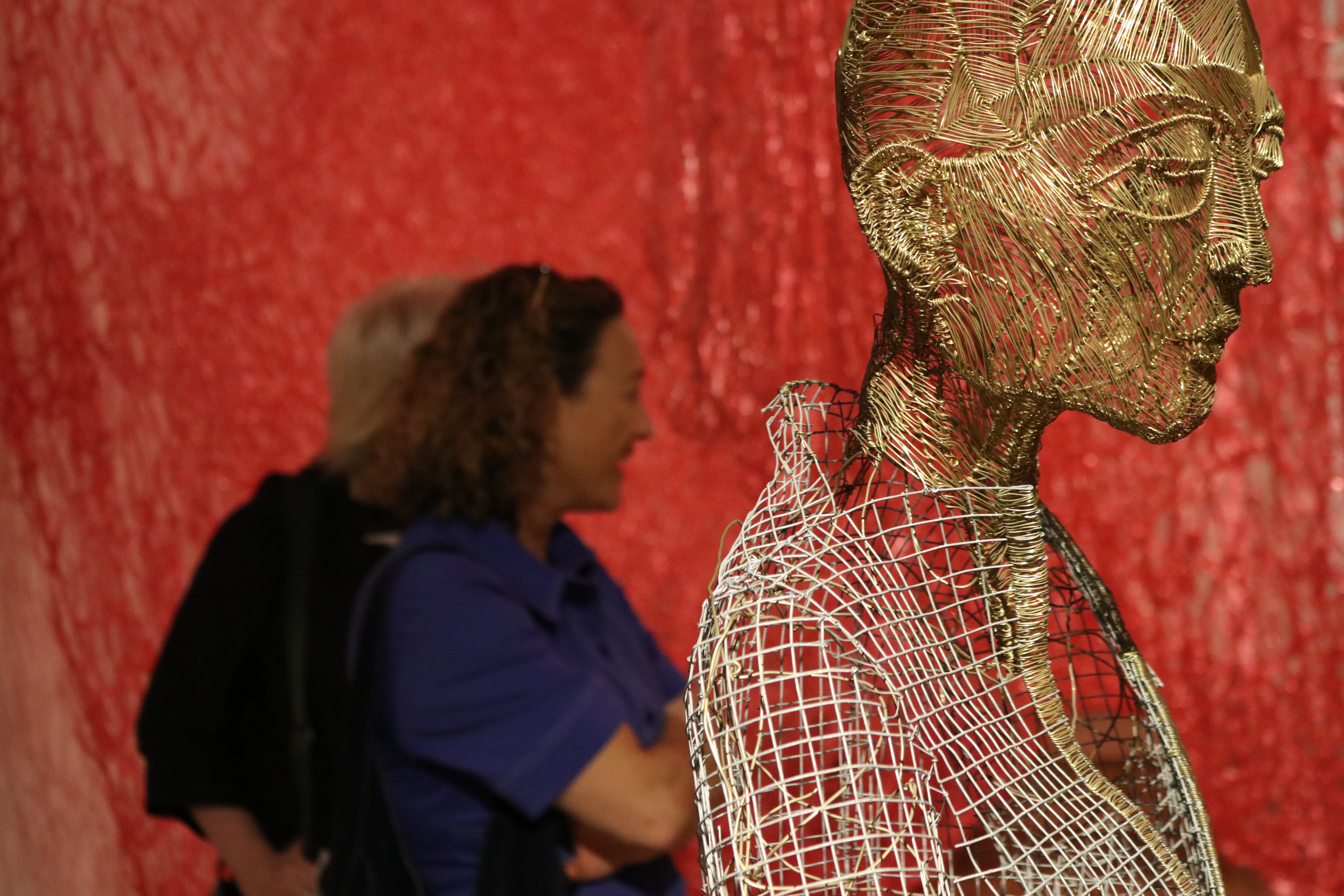
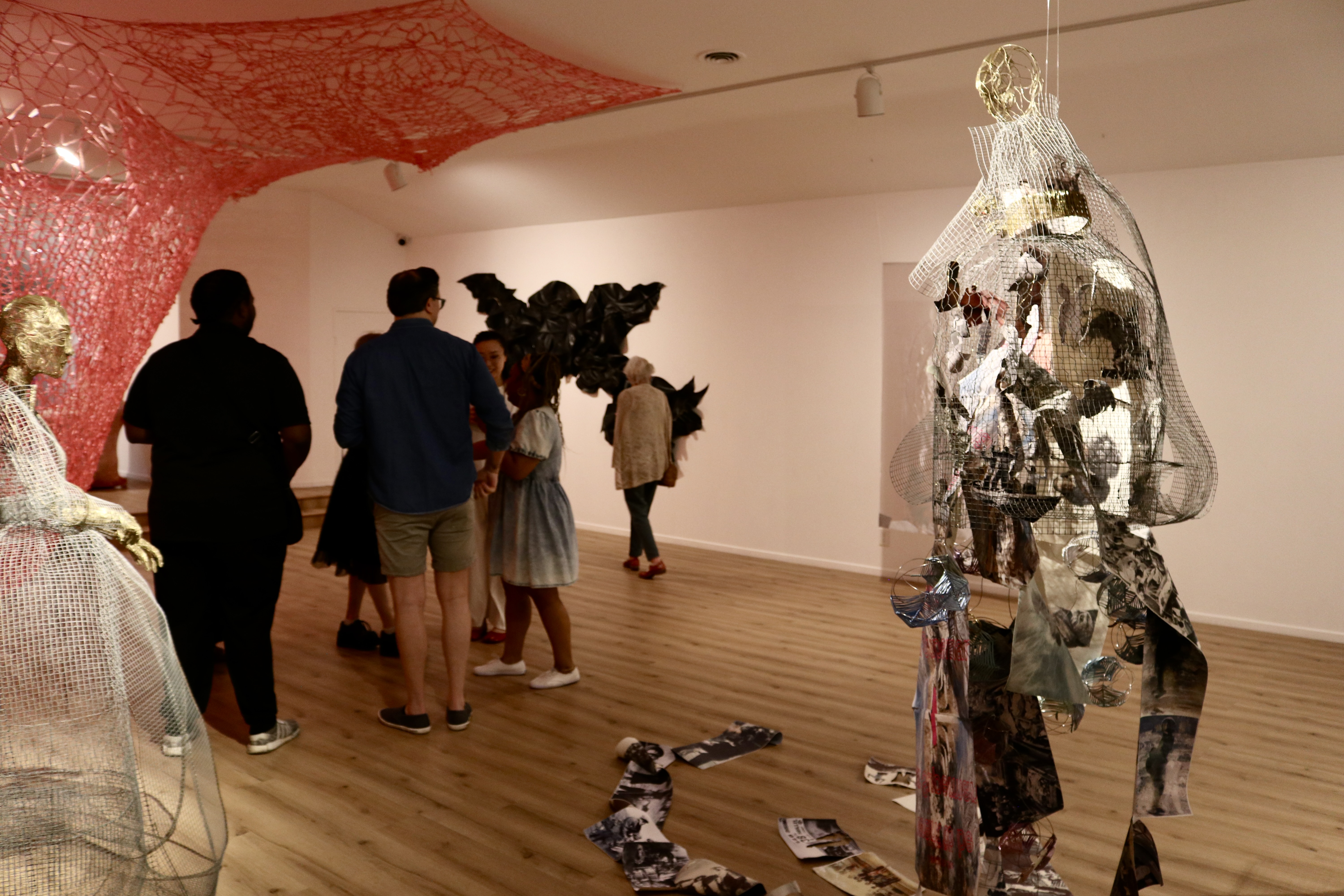
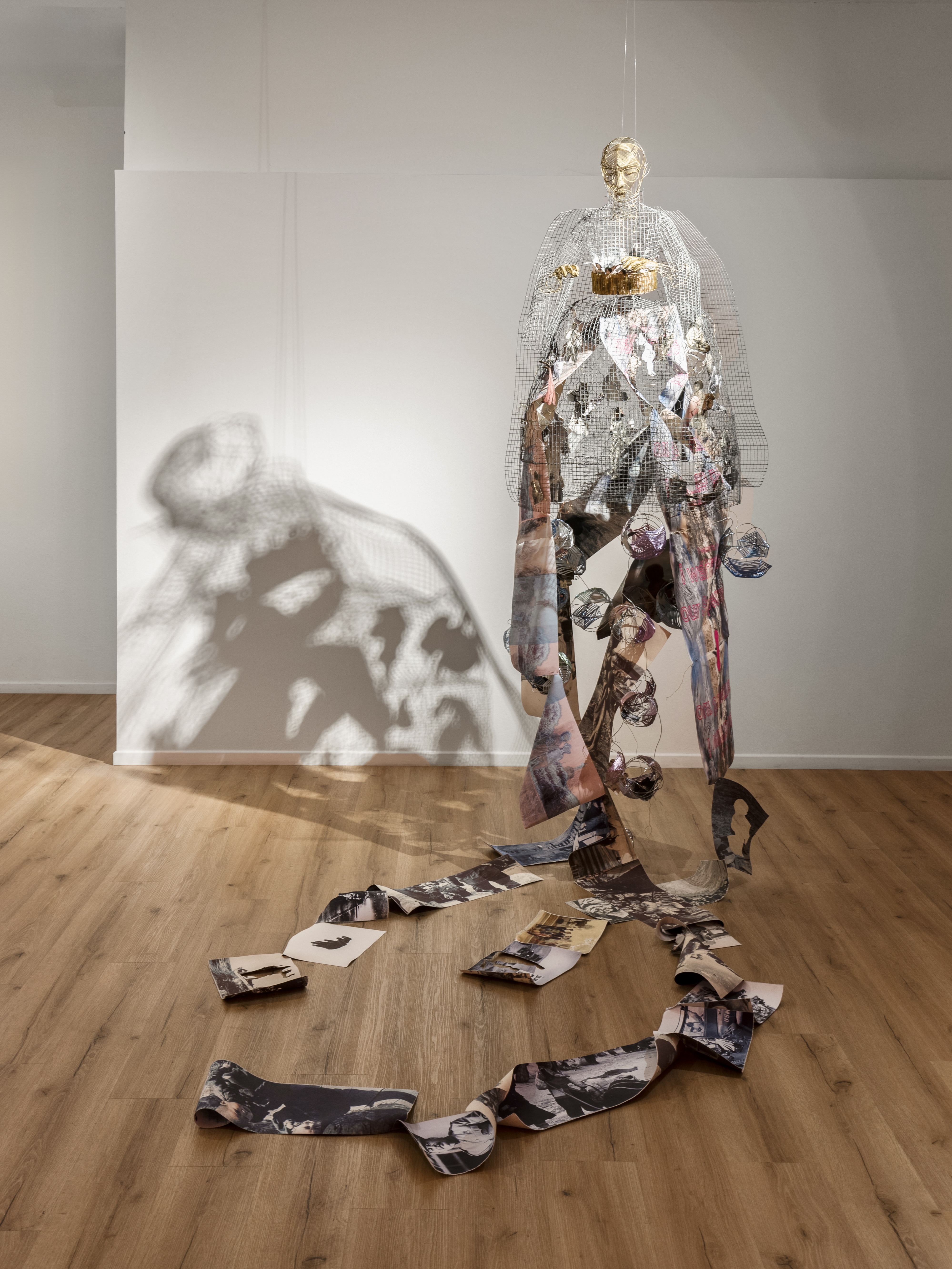
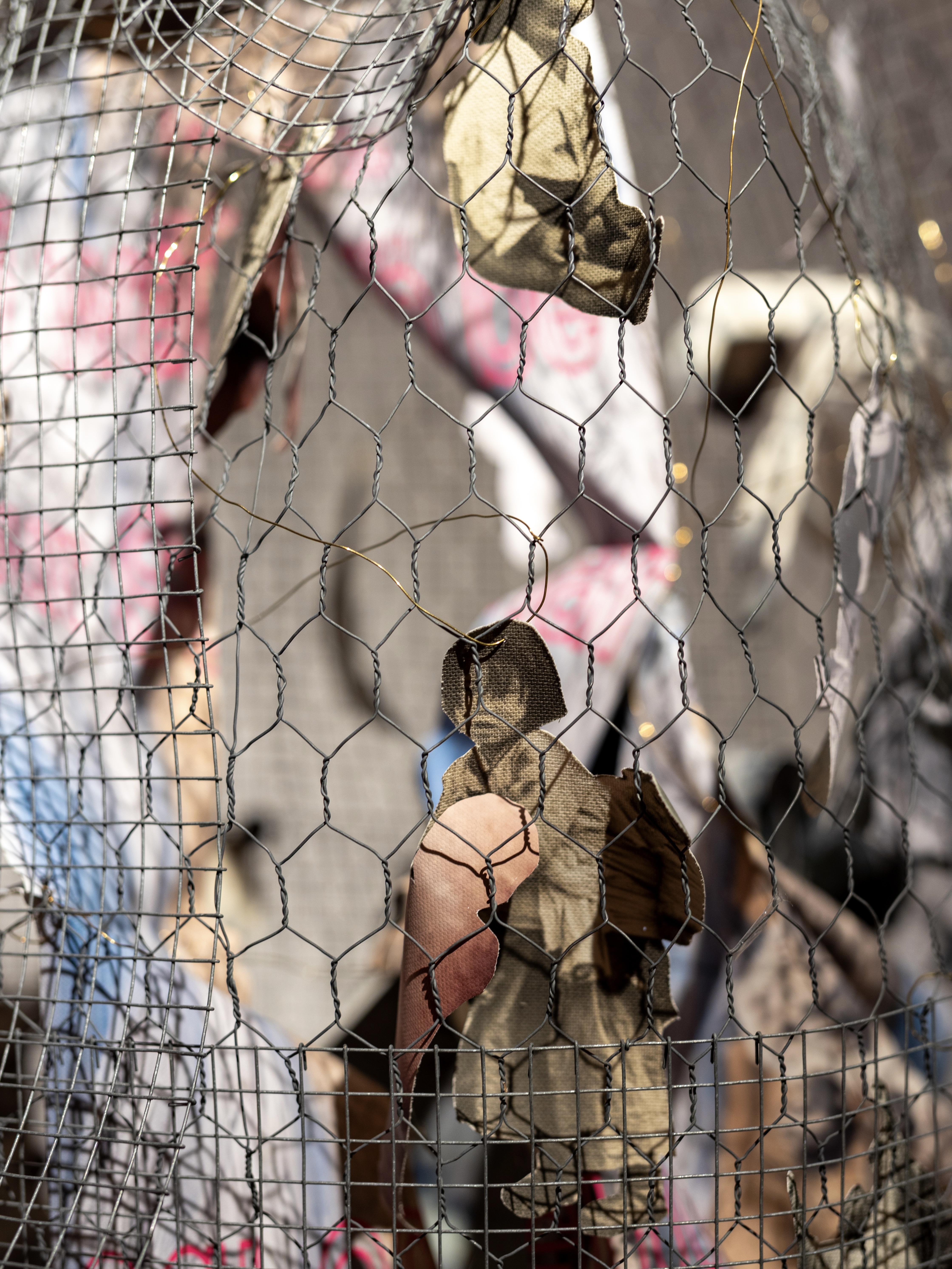
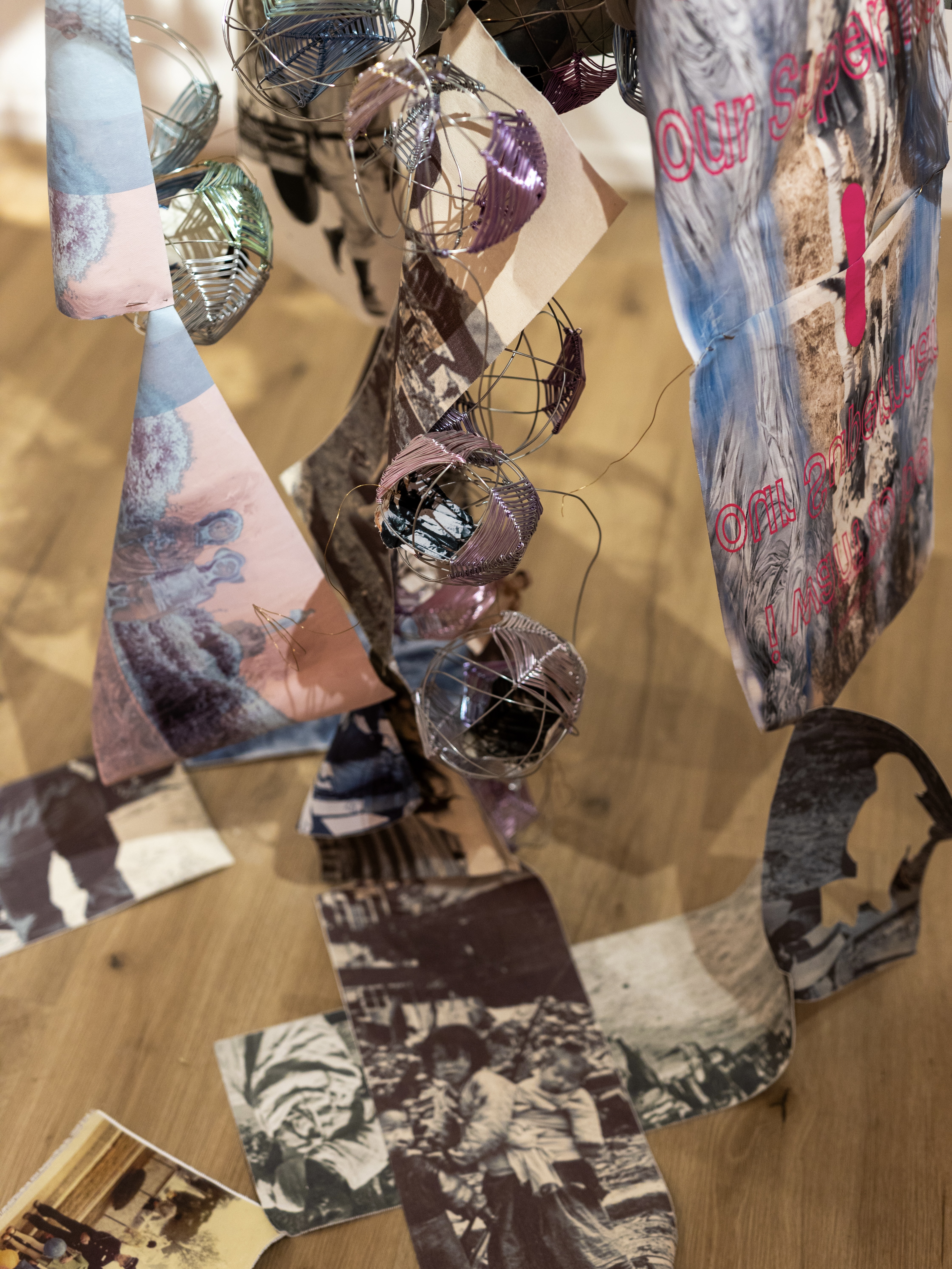
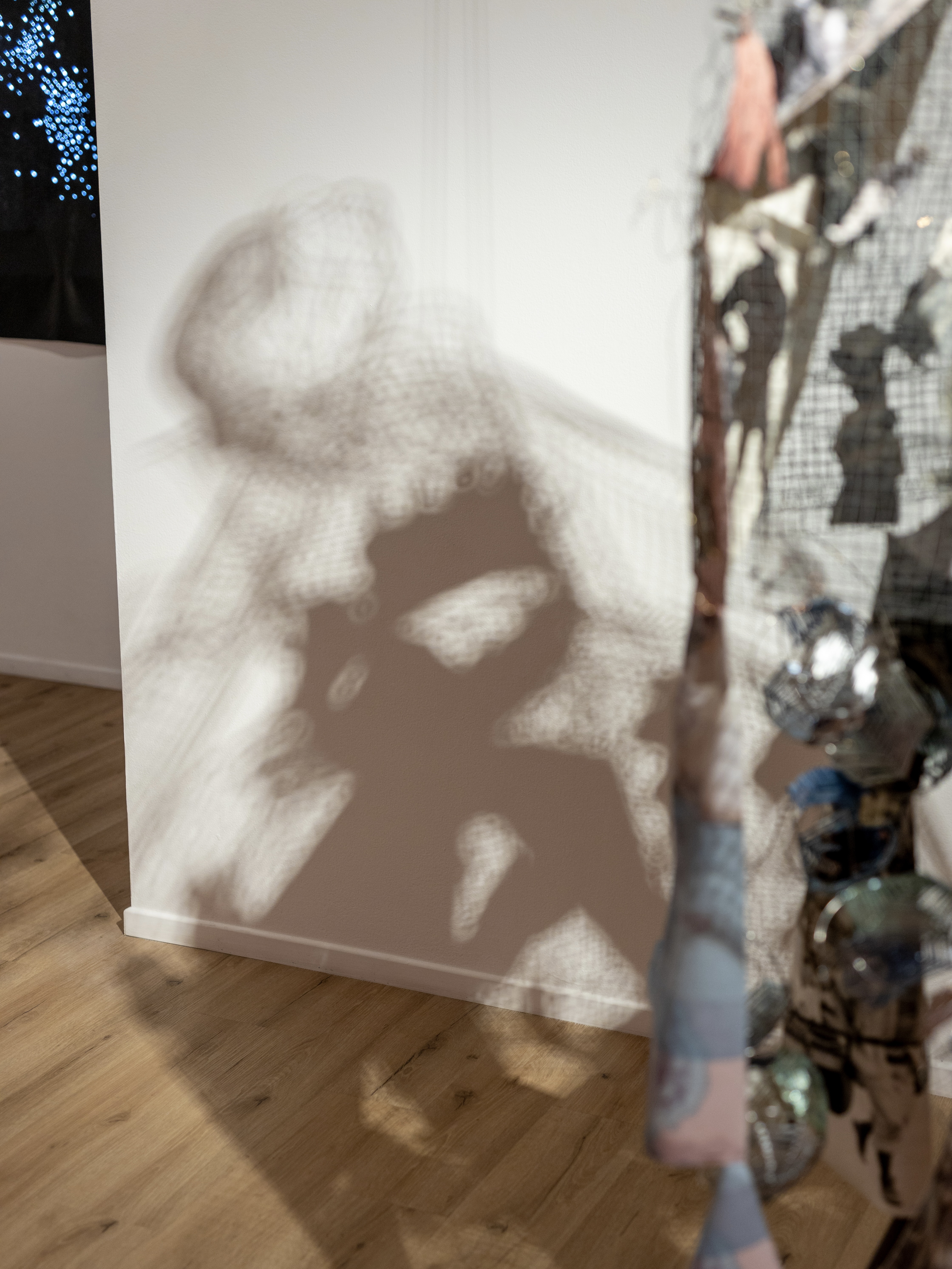
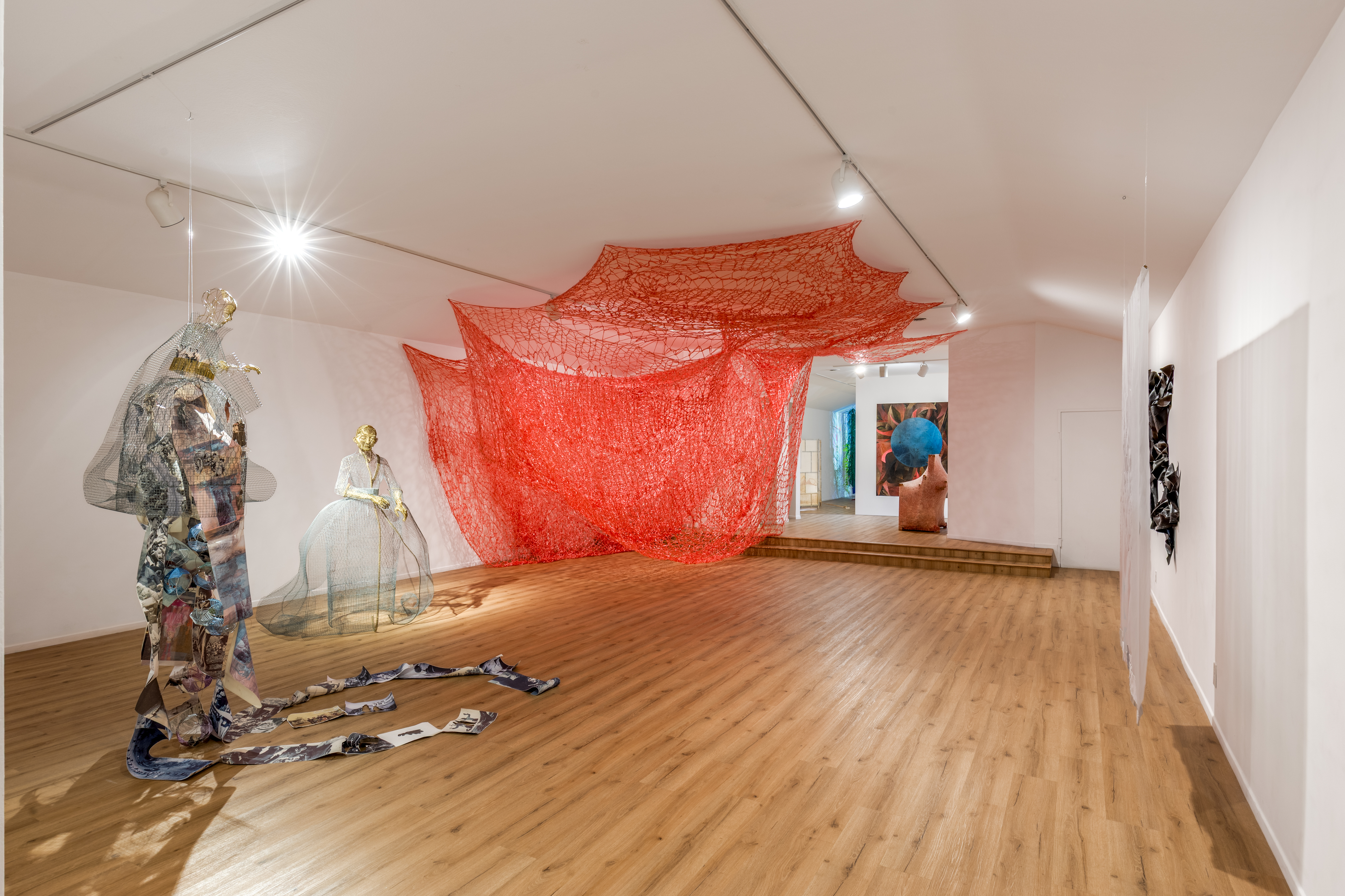
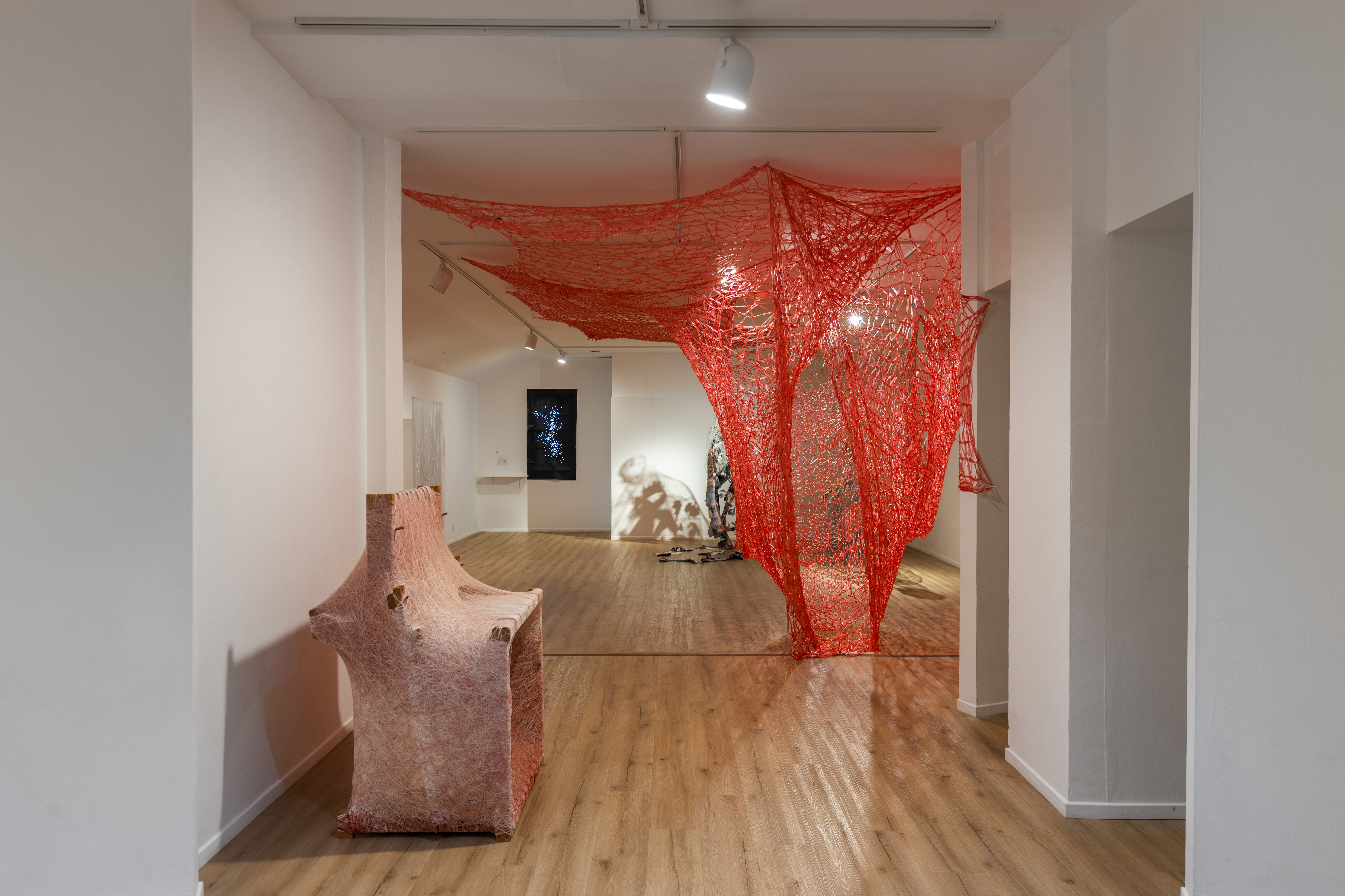
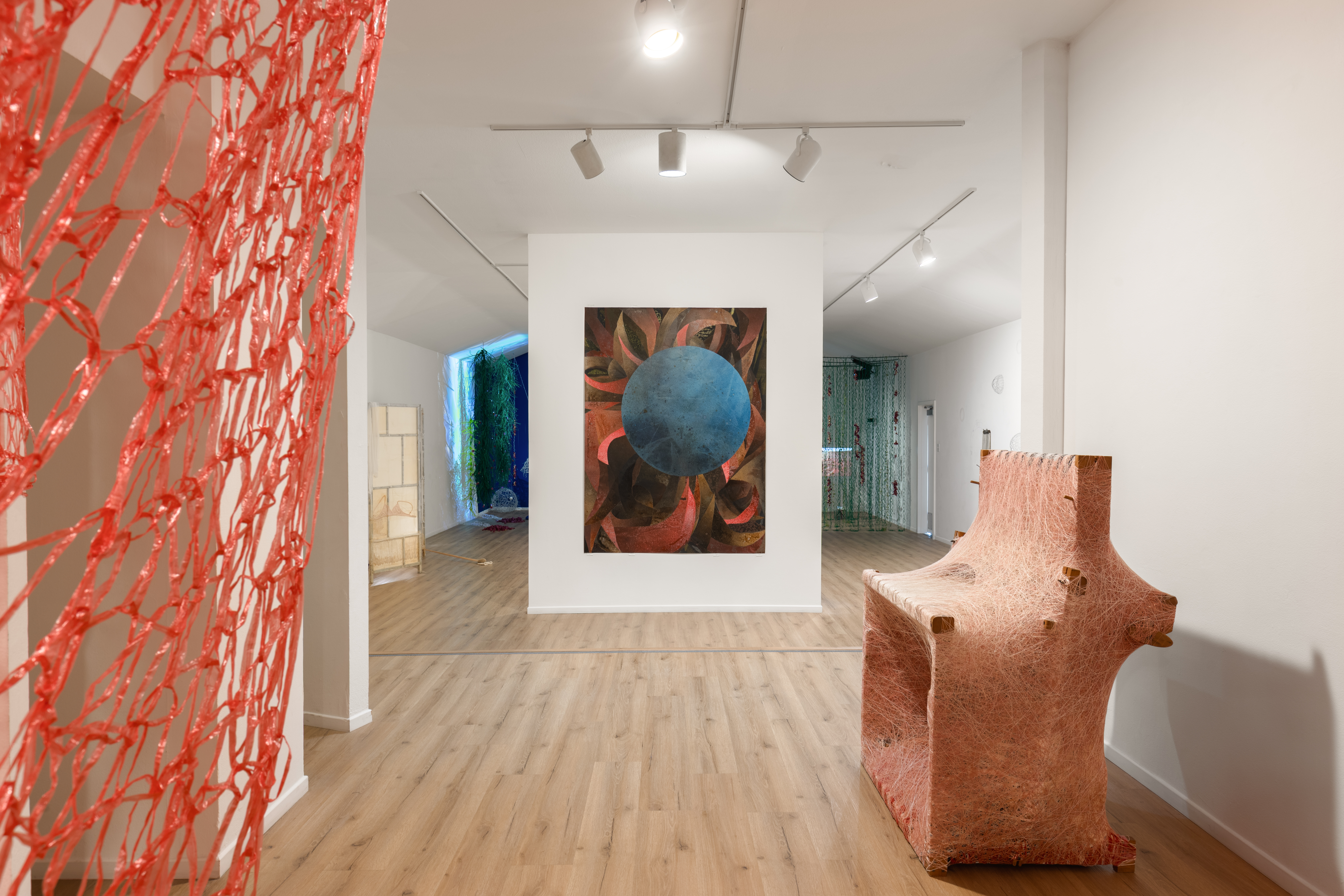
The works in the exhibition move through transformation, displacement, care, and persistence. Across textile, painting, sculpture, and installation, materials are treated as carriers of accumulated histories. Fabrics stretch and fold like second skins. Pigments disperse like sediment. Gestures of binding, weaving, and tending echo forms of labor that sustain life.
Collectively, the exhibition produces an atmosphere rather than a narrative. The space becomes a temporary womb. A holding environment where ecological time, migratory time, and bodily time overlap. Disappearance and return become part of the same movement. Matter disperses and recombines.
This landscape holds a more difficult memory. Just offshore, Terminal Island was once home to a thriving Japanese and Japanese American fishing community. In 1942, it was designated a restricted military zone. Residents were forced to leave. Homes were demolished. The port embodies both circulation and interruption. Movement and its sudden suspension. Within this field, time dilates. Scale dissolves. The micro and the cosmic entangle. With the act of looking, the viewer enters as participant. Another node within an expanding web of relation.
The exhibition proposes remembering as an ongoing relation, a continuation carried through matter, bodies, and the environments they inhabit. What has passed does not disappear. It persists in salt, in air, in the quiet weight of what was once unspoken, in the slow emergence of what was once invisible.
Curatorial Statement by Ann Shi
Scroll Up